Metal-organic frameworks: crystals built around empty space
Awarded to Susumu Kitagawa, Richard Robson and Omar M. Yaghi “for the development of metal–organic frameworks”.
1Pick your depth
What was the 2025 Nobel Prize in Chemistry awarded for?
The 2025 Chemistry prize honours metal-organic frameworks, crystals stitched together from metal nodes and rigid organic struts so that most of their volume is open, breathable space. A single gram can expose an internal surface area the size of a football pitch, which is why these molecular sponges can store hydrogen, capture carbon dioxide, or pull drinking water from desert air.
2Guess first
A solid is usually heavy and packed tight. Yet a single gram of this crystal hides as much surface as a football pitch. How can a solid contain that much surface?
How close were you?
You want a material that pulls drinking water out of dry desert air at night and lets it go in the morning sun. What would you change about such a crystal to make it do that?
How close were you?
3Learn it at ELI5
ELI5 done
Read the transcript
In 1974, Richard Robson made molecule models for his students, out of wooden balls with drilled holes. The holes did the thinking. Where they sat decided the shape of every model he built. Years later, he tried the same trick with tiny bits of metal and long molecules. They locked together into a crystal full of empty rooms. Today, crystals like this sip water out of dry desert air at night. The morning sun warms them, and the water comes out. Robson shared the 2025 Nobel Prize in Chemistry with Susumu Kitagawa and Omar Yaghi.
Undergrad done
Read the transcript
Omar Yaghi grew up in Amman, Jordan, in one room with no electricity or running water. At ten, he slipped into his school's locked library and found a book of molecule drawings. A metal-organic framework has metal clusters at its corners and rigid carbon-based molecules as struts. Together they build themselves into a crystal that is mostly empty space. His MOF-5 came in 1999. A couple of grams of it hold as much inner surface as a football pitch. Yaghi then lengthened the struts and made 16 versions of MOF-5 with different pores. One framework like this is being tested at a factory in Canada to catch carbon dioxide. Yaghi shared the 2025 Nobel Prize in Chemistry with Richard Robson and Susumu Kitagawa.
Expert done
Read the transcript
Susumu Kitagawa's grant applications kept coming back rejected, because funders saw no point in his porous crystals. He held on to an old idea from Zhuangzi, the usefulness of the useless. Richard Robson had shown the principle in 1989, with copper ions and a four-armed nitrile linker arranged in a diamond-like net. His constructions were rickety, and they fell apart. In 1997, Kitagawa made three-dimensional frameworks that took in methane, nitrogen and oxygen without changing shape. Later he made soft ones that breathe as gases move through. Omar Yaghi's MOF-5 used rigid zinc-oxygen clusters as its corners, and survives 300 degrees Celsius empty. By 2003 he had an isoreticular series, sixteen versions of one net with longer and shorter linkers. More than 100,000 frameworks have followed. Chipmakers already use them to hold toxic process gases. The 2025 Nobel Prize in Chemistry went to all three.
Imagine building with magnetic balls and sticks. The balls snap onto the ends of the sticks, and if you keep adding them you can build a big open cage, a bit like monkey bars, with lots of empty space inside.
A metal-organic framework is exactly that, only the balls are tiny clumps of metal and the sticks are small carbon-based molecules. They lock together into a neat crystal that is mostly empty room. Because there is so much space inside, the crystal works like a sponge: gases and even water can drift into the empty rooms and get held there.
A crystal that is mostly empty
Most solids are packed tight. These crystals are built to be full of holes instead. One small spoonful has so much hidden inner surface that, if you could unfold it, it would cover a football pitch. That huge inside is where all the useful work happens.
By choosing different metal balls and different molecular sticks, scientists can build sponges that grab one thing and ignore everything else. Some pull drinking water out of dry desert air. Some soak up the carbon dioxide that warms the planet. Some hold hydrogen fuel safely.
A metal-organic framework, or MOF, is a crystal made from two kinds of building block: metal nodes (single metal ions or small clusters of them) and organic linkers (rigid carbon-based molecules with two or more arms). The nodes act as corners and the linkers as struts, and they self-assemble into a repeating three-dimensional lattice.
The key feature is what is not there. Between the struts sit large, regular cavities, so a MOF is mostly open pore space. Pack those pores together and the internal surface area becomes immense: a couple of grams can expose an area comparable to a football pitch, far more accessible surface than older porous materials such as zeolites.
Build it like a net, on purpose
Because the nodes and linkers keep their shape as they assemble, you can predict the structure before you make it, then swap one linker for a longer or differently decorated one to widen the pores or change what sticks to their walls. Yaghi named this design-first approach reticular chemistry, from the Latin for net. It is why tens of thousands of distinct MOFs now exist.
Hidden surface inside one gram of MOF
MOFs expose more accessible internal surface than older porous solids such as zeolites or mesoporous silica.
The same design freedom is why MOFs have moved out of the lab. Tune the pores to grip carbon dioxide and a MOF becomes a carbon-capture filter; tune them to grip water and it pulls moisture from dry air overnight, releasing it when the sun warms the crystal the next morning. Other MOFs store hydrogen or methane fuel at lower, safer pressures.
A MOF is a coordination network: metal-containing nodes (often polynuclear clusters that Yaghi termed secondary building units, such as the Zn4O cluster in MOF-5) joined by polytopic organic linkers (for MOF-5, 1,4-benzenedicarboxylate). Because both pieces are rigid and their connectivity is fixed by the metal coordination geometry, the topology of the product can be reasoned out in advance. This is the central premise of reticular chemistry: assembling molecular building blocks into predetermined, periodic, porous nets held together by strong directional bonds.
A football pitch in a few grams
Removing the guest solvent from the pores leaves a permanently porous crystal whose walls are only atoms thick, so almost every atom is a surface atom. MOF-5 exposes roughly 2,900 square metres of internal surface per gram, and later frameworks such as NU-110 reach about 4,630 square metres per gram. A few grams therefore carry the accessible area of a football pitch, well beyond zeolites or mesoporous silica.
Same net, swappable struts
Keep the node and the net topology fixed but lengthen or decorate the linker, and you get an isoreticular series: a family of MOFs with the same architecture but systematically different pore sizes and pore-wall chemistry. Yaghi's 2002 work produced 16 variants of MOF-5 this way. Pore size, shape and chemical functionality become independent dials, which is what lets a framework be matched to a specific guest molecule.
Not every framework is rigid. Kitagawa showed that some MOFs are flexible, expanding, contracting or opening gates in response to guests, temperature or pressure, the so-called breathing or soft porous crystals. He also demonstrated reversible uptake of gases such as methane, nitrogen and oxygen with no loss of crystallinity, establishing that the cavities were genuinely accessible and reusable. Stability was the other hurdle: Robson's early frameworks collapsed once their guests were removed, whereas MOF-5 survived heating to 300 degrees Celsius, which made permanent porosity practical.
Where the empty space pays off
- Gas storage: high-surface frameworks pack hydrogen and methane into a tank at lower pressure than compression alone, which is why MOFs are pursued for clean-fuel storage.
- Carbon capture: pores tuned to bind carbon dioxide selectively pull it from flue gas or even ambient air, the basis of several MOF startups.
- Water harvesting: a MOF that adsorbs water vapour overnight and releases it when gently heated can produce drinking water from desert air using only sunlight, demonstrated in the Arizona desert.
- Separations and catalysis: size- and shape-selective pores sieve one molecule from a mixture or host catalytic sites, and some frameworks also conduct electricity or sense specific guests.
What began as Robson's single fragile crystal in 1989 is now a field of more than 100,000 reported structures, with thousands added every year. Because the building blocks are interchangeable, the design space is effectively open-ended, which is why some chemists call MOFs a defining material of this century.
A spoonful with a football pitch inside
Just a couple of grams of MOF-5, the framework Omar Yaghi built in 1999, holds enough internal surface to cover a football pitch if you could unfold it. More than 100,000 different metal-organic frameworks have now been reported, each with its own size and shape of inner room.
4Check yourself
What are the two kinds of building block that make up a metal-organic framework?
Why can a single gram of a MOF hold such an enormous internal surface area?
Which of these is a real, demonstrated use of MOFs?
Key terms
- Metal-organic framework (MOF)
- A crystalline solid built from metal nodes joined by organic linker molecules, leaving a regular network of pores. Most of its volume is empty space, which gives it a huge internal surface area.
- Metal node
- The metal part of a MOF, a single metal ion or a small cluster of them, that acts as a corner where several organic struts meet.
- Organic linker
- A rigid carbon-based molecule with two or more connecting arms that acts as a strut, bridging the metal nodes and setting the size of the pores.
- Reticular chemistry
- The design-first approach, named by Omar Yaghi, of building solids by linking molecular blocks into a chosen, predictable net. From the Latin reticulum, a little net.
- Porosity
- The fraction of a material made up of empty pore space. MOFs are among the most porous solids known.
- Isoreticular series
- A family of MOFs that share the same network pattern but use longer or differently decorated linkers, so the pore size and chemistry can be tuned while the architecture stays the same.
The laureates
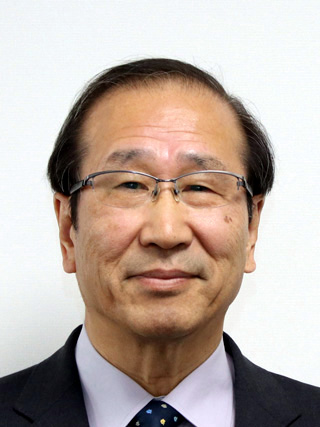
In the 1990s Kitagawa showed that gases could flow freely in and out of these porous crystals, and that the frameworks could flex and breathe rather than shatter. His 1997 materials, built around cobalt, nickel and zinc, took up and released methane, nitrogen and oxygen while keeping their shape, which proved the cavities were genuinely useful.
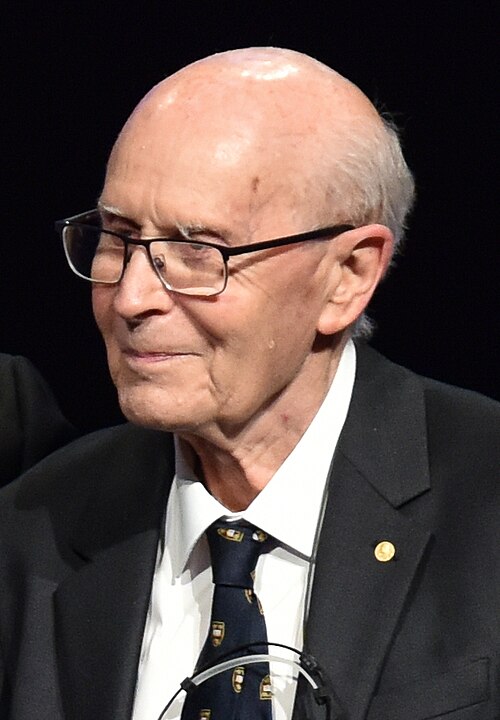
Working in Melbourne in 1989, Robson built the first framework of this kind by linking copper ions with a four-armed organic molecule, an idea sparked by a wooden ball-and-stick model of a molecule. His crystal had the right open, diamond-like architecture but collapsed easily, so the method needed a firmer foundation.
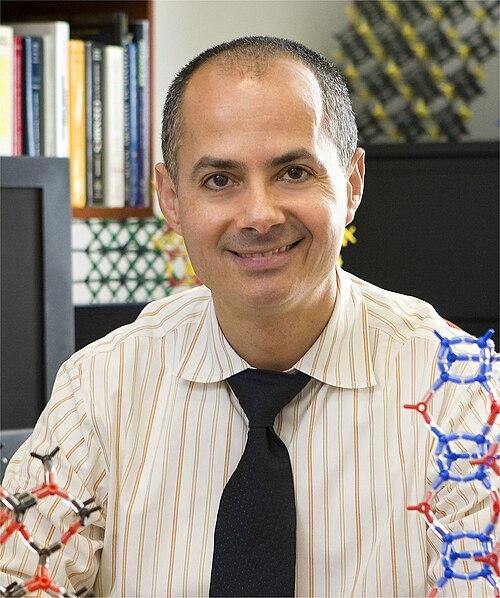
In 1999 Yaghi made MOF-5, a zinc-based framework so stable it could be heated to 300 degrees Celsius without collapsing, with a couple of grams holding the surface area of a football pitch. He then showed the structures could be redesigned on purpose to change their pores, an approach he named reticular chemistry, and used a MOF to harvest water from desert air.
Sources
Facts are pinned from the official Nobel Prize API. The explanations were written from these sources: