Why growth no longer stops
Awarded to Joel Mokyr, Philippe Aghion and Peter Howitt “for having identified the prerequisites for sustained growth through technological progress · for the theory of sustained growth through creative destruction”.
1Pick your depth
What was the 2025 Nobel Prize in Economics awarded for?
The 2025 economics prize explains why, for the first time in history, economic growth became permanent instead of fading after each invention. Joel Mokyr identified the conditions a society needs for one breakthrough to lead to the next, while Philippe Aghion and Peter Howitt built the model showing how each new product topples the firm behind the old one and keeps the whole economy climbing. Together they describe the engine that has roughly doubled living standards within a single working life for two centuries.
2Guess first
For almost all of human history, a child lived about as well as their grandparents. Then, around 200 years ago, living standards started doubling within a single lifetime and never stopped climbing. What changed?
How close were you?
A new technology arrives and wipes out the leading company in an industry, along with its jobs. For the economy as a whole, is that mostly good or mostly bad?
How close were you?
3Learn it at ELI5
ELI5 done
Read the transcript
Early one morning, Joel Mokyr opened his computer and found an email saying congratulations. But it was not his birthday. For most of history, a new tool made life better for a while. Then progress stopped. Mokyr found growth keeps going when people learn why things work, and when they welcome new ideas. Philippe Aghion and Peter Howitt explained how it keeps climbing. One company makes the best phone, until a rival's better one takes the top spot. Mokyr shared the 2025 prize in economic sciences with them.
Undergrad done
Read the transcript
In the fall of 1987, Peter Howitt came to MIT on sabbatical. Philippe Aghion had just started teaching there. Aghion, a microeconomist, was drawn to creative destruction. Howitt, a macroeconomist, saw how to model it. In their 1992 model, a firm with a better product takes the market and earns monopoly profits. Those profits lure the next innovator, whose product makes the old one obsolete. In a typical year, more than 10 percent of American firms enter or exit the market. Joel Mokyr explained why this engine started just over 200 years ago. Before then, people knew that inventions worked without knowing why, so progress stalled. Mokyr won half of the 2025 economics prize, and Aghion and Howitt shared the other half.
Expert done
Read the transcript
In 1561, pushed by the guild of red-metal turners, Nuremberg's city council attacked coppersmith Hans Spaichl. His improved slide rest lathe threatened their business. Joel Mokyr used such cases to explain why pre-industrial growth kept fading. Techniques lacked a theory of why they worked, and incumbents could block change. In 1992, Philippe Aghion and Peter Howitt modelled the market side. Each innovation raises quality by a fixed step, and the old leader's patent becomes worthless. Growth roughly equals the rate of creative destruction times the gain per step. It was the first macroeconomic model of creative destruction in general equilibrium. Innovators ignore the knowledge they hand to successors, which pushes research too low. They also ignore the rents they destroy, so business stealing can push it too high. Which force wins differs by market, so the model shows where research subsidies pay off.
Picture a ladder where someone keeps adding a higher rung. Whoever stands on top is the best, until someone climbs above them with something better. The old leader falls behind, but the ladder keeps getting taller, so everyone ends up higher than before.
An economy grows the same way. One company makes the best phone, then a rival makes a better one and takes its place. The old leader loses, yet the new phone is better for everyone. This constant replacing of the old by the better is called creative destruction, and it keeps growth going.
Why growth became permanent
For most of history a clever invention helped for a while, then progress fizzled out. Joel Mokyr showed that growth only lasts when people understand why things work, not just that they do, and stay willing to let new ideas replace the old ones.
For most of human history, growth was not sustained. A good harvest, a new tool, or a trade route could raise living standards for a generation, but the gains faded and incomes drifted back. Only in the last two centuries did growth become the normal state of affairs, with incomes in industrialised countries rising by almost two per cent a year, enough to double living standards within a working life.
Joel Mokyr, an economic historian, asked why the change stuck this time. His answer is that sustained growth needs a continual flow of what he calls useful knowledge, and that this knowledge has two halves. Propositional knowledge describes the regularities of nature and explains why something works. Prescriptive knowledge is the practical recipe for how to make it work. When inventors grasped the underlying science, not just the trick, each improvement could feed the next instead of being a dead end. Mokyr also stressed that a society must stay open to change, because new technology threatens established interests who often try to block it.
Growth as creative destruction
Philippe Aghion and Peter Howitt built a mathematical model of growth driven by creative destruction. A firm that invents a better product earns large profits as the new market leader. That prize is precisely what motivates the next inventor to build something better still and knock the current leader off the top. Growth is the by-product of this endless contest, in which each innovation makes the previous one obsolete.
The model carries a warning. Because every innovation destroys the value of the technology it replaces, those who stand to lose have a strong incentive to resist. If incumbents can lobby, regulate or block newcomers, creative destruction stalls and so does growth. The laureates therefore argue the conflict must be managed, not suppressed: strong property rights to reward inventors, balanced with competition that stops today's leaders from locking out tomorrow's.
The deep puzzle is not why growth happens but why it persists. Pre-modern economies saw genuine breakthroughs, yet each was a level shift: incomes rose, then settled. Sustained growth requires that the rate of improvement does not decay to zero, which means the stream of productive new ideas must keep regenerating itself. The 2025 prize splits this problem into its historical preconditions, studied by Mokyr, and its market mechanics, modelled by Aghion and Howitt.
Knowing why, not just that
Mokyr separates propositional knowledge, an understanding of the natural regularities that explain why a technique works, from prescriptive knowledge, the techniques themselves. His argument is that earlier waves of invention ran out of road because they rested on prescriptive know-how with no explanatory base, so improvements could not compound. The Industrial Revolution became permanent because a widening base of propositional knowledge let each advance suggest the next. In A Culture of Growth he adds the cultural condition: a Republic of Letters and an elite who believed that studying nature should improve the human condition created an open, contestable market for ideas, which is what turned a one-off spurt into self-sustaining progress.
Aghion and Howitt formalised the market side in their 1992 Econometrica model, the founding paper of Schumpeterian endogenous growth theory. Innovations arrive as a random (Poisson) process whose rate rises with the amount of labour devoted to research. Each successful innovation is a vertical step up a quality ladder: it lets its owner earn monopoly profits, but only until the next innovation renders it obsolete. The expected monopoly rent is what funds research, so growth is endogenous, generated from inside the model by firms chasing those rents rather than handed down as an external trend.
Why the market rate is not the ideal rate
The model shows that growth need not be socially optimal. An innovator captures only part of the value it creates and ignores the knowledge that spills over to future inventors, which pushes research below the ideal level. At the same time, each innovation destroys an incumbent's rents, a business-stealing effect the innovator also ignores, which can push research above the ideal. The balance can tip either way, which is why competition and innovation policy matter, and why later work by Aghion and colleagues found the link between competition and innovation can be an inverted U rather than a straight line.
Both halves of the prize converge on a political tension. Creative destruction produces losers as surely as winners, and the losers, established firms and the workers tied to them, have every incentive to slow it down through lobbying, regulation or capture. Mokyr's history shows that societies which suppressed challenges to incumbents fell back into stagnation; the Aghion and Howitt framework shows why. Sustained growth therefore depends on institutions that give inventors real but temporary rewards while preventing today's leaders from freezing the ladder in place. Growth is not automatic. It is a contest that has to be kept open.
Two per cent a year doubles your world
Sustained growth of just under two per cent a year sounds modest, but it doubles average income within a single working life. For most of human history that was unimaginable: living standards barely moved from one generation to the next. The 2025 prize is about why, in the last 200 years, that slow doubling became the normal state of the economy rather than a brief lucky streak.
4Check yourself
What does 'creative destruction' describe?
According to Joel Mokyr, why did growth become sustained around 1800 instead of fading as it always had?
Why can creative destruction stall, leaving an economy stuck?
Key terms
- Creative destruction
- The process in which a new, better product or method displaces the firm and technology that led before, destroying old value while pushing overall productivity up. It is the core mechanism in Aghion and Howitt's growth model.
- Sustained growth
- Continual, self-renewing growth in living standards, as opposed to a one-off gain that fades. For most of history growth was not sustained; over the last 200 years it became the norm.
- Useful knowledge
- Mokyr's term for the knowledge that drives technology. It combines propositional knowledge (why something works) and prescriptive knowledge (how to do it).
- Propositional knowledge
- An understanding of the regularities of nature that explains why a technique works. Mokyr argued that a growing base of it is what let improvements compound instead of stalling.
- Endogenous growth
- Growth generated from inside an economic model by the decisions of firms and inventors, rather than treated as an outside trend. Aghion and Howitt's 1992 model is a founding example.
- Business-stealing effect
- In the Aghion and Howitt model, the part of an innovation's value that comes from capturing an incumbent's profits. Because innovators ignore the loss they impose, the market rate of innovation can differ from the socially ideal rate.
The laureates
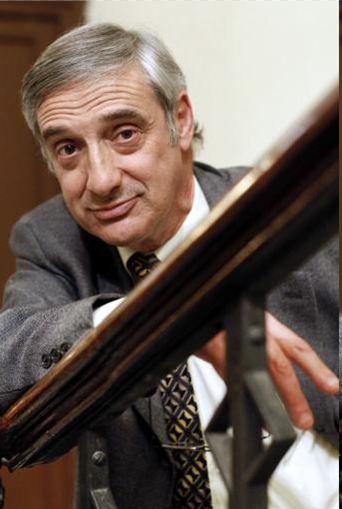
An economic historian at Northwestern University, Mokyr asked why the Industrial Revolution became permanent when earlier bursts of invention had always faded. His answer is that lasting growth depends on a steady flow of useful knowledge, an understanding of why techniques work and not just how, carried by a culture that stays open to new ideas and to the upheaval they bring.
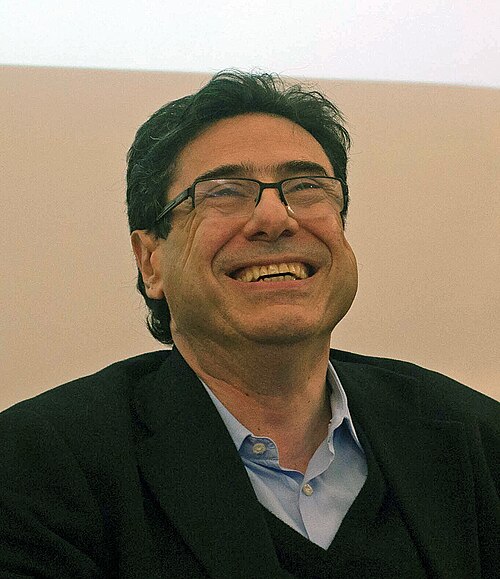
With Peter Howitt, Aghion turned Schumpeter's idea of creative destruction into a precise mathematical model of growth in their 1992 paper. He has since used it to study competition, inequality and innovation policy, and is a co-author of the book The Power of Creative Destruction.
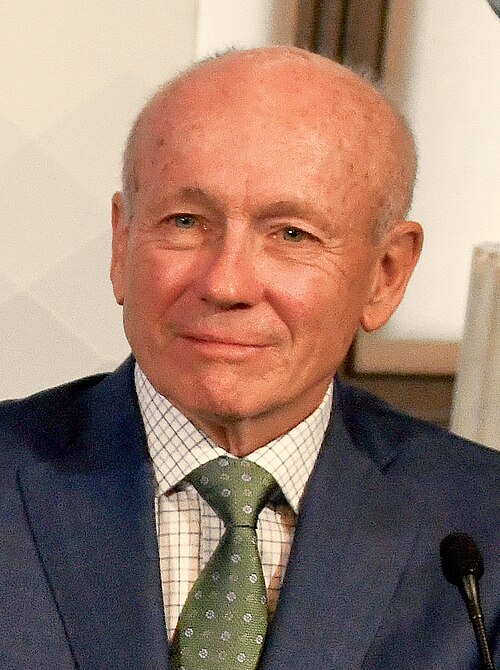
Howitt co-authored the 1992 Econometrica model that founded Schumpeterian endogenous growth theory, showing how the profits a new market leader earns are exactly what fund the research that will eventually unseat it. His work helped connect abstract growth theory to real data on firms.
Sources
Facts are pinned from the official Nobel Prize API. The explanations were written from these sources: