Louise Glück: making the private self universal
Awarded to Louise Glück “for her unmistakable poetic voice that with austere beauty makes individual existence universal”.
1Pick your depth
What was the 2020 Nobel Prize in Literature awarded for?
The 2020 Literature prize went to the American poet Louise Glück for a spare, exact voice that turns her own life into something every reader can recognise. Working from childhood, family, and loss, and often speaking through figures from Greek myth, she made the most private feelings feel shared.
2Guess first
Most Nobel-winning writers are praised for the sweep of their novels or the richness of their language. Glück won for short poems in plain, everyday words. How can such spare poetry carry that much weight?
How close were you?
3Learn it at ELI5
ELI5 done
Read the transcript
When Louise Glück was about 5 or 6, she held a contest in her head to pick the greatest poem in the world. She paced a bedroom at her grandmother's house, reciting silently. A poem by William Blake won. She felt Blake was speaking just to her. She grew up to write her own poems, in plain words. Many are about her family. She often speaks through people from old Greek stories. So her own feelings can belong to any reader. In 2020, Louise won the Nobel Prize in Literature.
Undergrad done
Read the transcript
It was barely 7 in the morning on 8 October 2020 when Nobelprize.org called Louise Glück at home. She agreed to 2 minutes, but she needed coffee. She first feared losing her writer friends, then decided that would not happen. Her first book, Firstborn, was rejected 28 times before appearing in 1968. She advised new readers to skip it, unless they wanted to feel contempt. With Ararat, in 1990, she learned to build poems from ordinary speech. Its images of family life are almost brutally straightforward. She often speaks through mythic figures such as Persephone. The Academy says such masks turn private intimacies into something universal. The Wild Iris, set in a garden where flowers speak, won her the Pulitzer Prize in 1993.
Expert done
Read the transcript
As a teenager, Louise Glück read Emily Dickinson late at night on the living room sofa. She felt Dickinson had chosen her, as if the two were companions in invisibility. Anders Olsson, who chaired the Nobel Committee, writes that in her severity she resembles Dickinson more than any other poet. Her Persephone and Eurydice are masks for a self in transformation. Averno, from 2006, retells Persephone's descent into the underworld. Its title names a crater west of Naples that the Romans saw as the entrance to that world. In Faithful and Virtuous Night, from 2014, an elderly painter notes that he shares a birthday with Kant. Glück, like Kant, was born on 22 April. Olsson reads the painter as a thin mask for the poet. In her Nobel lecture, she said she believed the Swedish Academy was choosing to honour the intimate, private voice.
Louise Glück was one of the most admired poets in the United States for fifty years. She won most of her country's major poetry awards, served as the United States Poet Laureate, and in 2020 she received the Nobel Prize in Literature.
Her poems are short and use plain, everyday words, yet they are not simple. She writes about ordinary life: parents and children, gardens and flowers, love that fails, and the people we lose. The language stays clear and honest, with no decoration, so the feeling underneath reaches you directly. The Academy praised her 'unmistakable poetic voice' that makes one person's life feel like everyone's.
She got her medal at home
Because of the COVID pandemic, the usual Nobel banquet in Stockholm was cancelled, so Glück received her prize at home. She was the sixteenth woman to win the Nobel Prize in Literature since it was first awarded in 1901.
Glück's poems read as plainly spoken, but the plainness is built with great care. Critics call her tone deceptively natural: ordinary diction, short lines, and a refined sense of how a whole book hangs together. She drew openly on her own life, on childhood, family, and loss, yet she rejected the label of confessional poet. The aim was never private disclosure for its own sake. She listens, in her own words, for what is left of the self's dreams and delusions, and few poets are harder on those illusions than she is.
The Wild Iris (1992)
The Wild Iris won the Pulitzer Prize and remains her most beloved collection. It is set in a garden and written in three kinds of voice: the flowers speaking to the gardener, the gardener-poet speaking to a silent God, and a God who discloses almost nothing in return. From that simple scene she builds a meditation on death, faith, and the return of life after winter.
The ground she returns to
- Childhood and family: parents, siblings, and the unspoken wounds of a household.
- Loss and rebirth: grief that opens, again and again, onto the chance of renewal.
- Greek myth and the classical past, used as masks for a living self.
- Nature and the garden, especially the turn from winter to spring.
- The self confronting its own illusions, with austere honesty.
This is how Glück makes one life universal. She lends her feeling to figures from myth who were abandoned, punished, or lost, so that Dido, Persephone, and Eurydice become masks through which any reader can speak. A particular grief, set inside an ancient story, stops being only hers and becomes a shape that fits many lives. That movement, from the intimate to the shared, is what the Nobel citation means by making 'individual existence universal'.
Glück is often described as a post-confessional poet. She emerged after Robert Lowell, Sylvia Plath, and Anne Sexton had made private pain the raw material of American verse, but she pulled back from open confession toward something more controlled and impersonal. Critics most often reach for Emily Dickinson as her truest ancestor, for the same severity and the same refusal to accept the easy consolations of faith. In her own essays she praises the urgent tone of T. S. Eliot, the inward listening of Keats, and the chosen silence of George Oppen, which together describe the qualities she pursued.
Ararat (1990) and austere intelligence
After her father's death, Glück moved away from single lyrics toward composing whole books as unified sequences, and Ararat is the clearest example. Three qualities lock together in it and recur for the rest of her career: the subject of family life, an austere intelligence, and a composition designed as a single book rather than a gathering of poems. The diction is ordinary and the images of painful family relations almost brutally plain, with no trace of ornament. The critic Dwight Garner later called it one of the most sorrow-filled books of American poetry in twenty-five years.
Myth is the engine that lifts this private material into the universal. In Averno (2006), which the Academy singled out as masterly, the abduction of Persephone into the land of the dead becomes a way to write about a daughter, a mother, fear, and the border between living and dying. In the chapbook October (2004), written after the attacks of September 11, a single poem in six parts uses ancient myth to hold a collective trauma. The personal and the mythic are never separate in her work, and each gives the other its weight.
Why the 2020 prize mattered, and what it answered
- It honoured poetry, which the literature prize reaches for far less often than fiction.
- It rewarded restraint and clarity at a time when much celebrated writing was expansive, an art made of plain words and exact feeling.
- It arrived after years of crisis for the Swedish Academy: the 2018 prize was postponed amid a sexual assault scandal, and the 2019 choice of Peter Handke drew international protest. Many read Glück as a deliberately uncontroversial, widely respected pick.
- Some noted that she was little known to general readers outside the United States, a reminder of how much a Nobel can suddenly enlarge a poet's audience worldwide.
“whatever returns from oblivion returns to find a voice”Louise Glück, The Wild Iris (1992)
Her most loved book is spoken partly by flowers
In The Wild Iris, the Pulitzer-winning collection, many poems are spoken in the voices of garden flowers addressing the gardener, while others give voice to the gardener and to a remote God. A snowdrop pushing up after winter becomes her image for life returning from oblivion.
4Check yourself
What is Louise Glück best known for in her poetry?
Which collection won Glück the Pulitzer Prize and is set in a garden?
How does Glück make a private feeling feel universal?
Key terms
- Austere
- Plain and severe, without decoration. The Nobel citation praised the 'austere beauty' of Glück's poetry, meaning beauty reached with very little ornament.
- Confessional poetry
- A style associated with Robert Lowell, Sylvia Plath, and Anne Sexton that draws openly on the poet's private pain. Glück used autobiographical material but resisted being called a confessional poet.
- The Wild Iris
- Glück's 1992 collection, winner of the Pulitzer Prize, set in a garden and spoken partly in the voices of flowers, a gardener, and God.
- Persephone
- A figure from Greek myth carried off into the underworld by Hades. Glück returns to her, especially in Averno (2006), as a mask for writing about death, mothers, and daughters.
- Poet Laureate
- An official national poet. Glück was Poet Laureate of the United States from 2003 to 2004.
The laureate
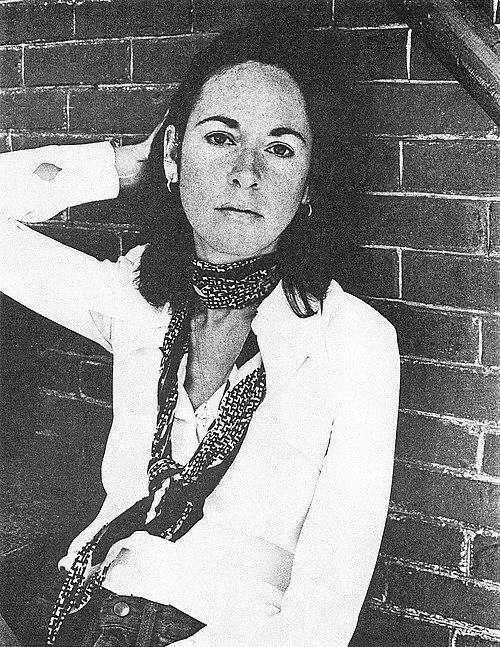
Born in New York City in 1943 and raised on Long Island, Glück was an American poet and essayist who published a dozen collections over five decades. She won the Pulitzer Prize and the National Book Award and served as United States Poet Laureate before the 2020 Nobel. She died in 2023.
Sources
Facts are pinned from the official Nobel Prize API. The explanations were written from these sources: