Jon Fosse: giving voice to the unsayable
Awarded to Jon Fosse “for his innovative plays and prose which give voice to the unsayable”.
1Pick your depth
What was the 2023 Nobel Prize in Literature awarded for?
The 2023 Literature prize went to the Norwegian writer Jon Fosse, one of the most performed living playwrights, for a spare, hypnotic style that uses very few words to reach the feelings most language cannot touch: dread, grief, faith, and the silence between people.
2Guess first
Most prize-winning writers are praised for rich, dense language. Fosse was praised for the opposite: stripping language down to almost nothing. How can using fewer words say more?
How close were you?
3Learn it at ELI5
ELI5 done
Read the transcript
At school in Norway, a teacher asked a boy named Jon to read aloud. A sudden fear filled him, and he ran out of the classroom. So he began writing his own short poems. Writing made him feel safe. That boy became the writer Jon Fosse. He uses very few words and long silences. His dogs cannot talk, he says, yet they understand a lot. In his stories, you feel what people cannot say. In 2023, he won the Nobel Prize in Literature, the first Norwegian winner in 95 years.
Undergrad done
Read the transcript
Jon Fosse wrote novels and poems and had no wish to write for the stage. Then a public drama scheme offered him good money for the opening scene of a play. He wrote the whole play. Someone Is Going to Come is still his most performed play. Claude Régy's 1999 production in Paris made his name across Europe. It gave him the biggest surprise of his writing life. He could simply write the word pause, and the silent speech was there. He writes in Nynorsk, a minority form of written Norwegian. In it, he can hear his grandmother's voice. His 2023 Nobel Prize honours plays and prose that give voice to the unsayable.
Expert done
Read the transcript
On 5 October 2023, Jon Fosse was driving beside a fjord in western Norway when Mats Malm of the Swedish Academy called. In his 10th year of Nobel speculation, he had not expected it. His second novel, Stengd gitar, from 1985, stages what the Academy calls the critical moment of irresolution. A young mother locks herself out of her flat with her baby still inside. She needs help, yet she cannot leave the child. In his plays, pauses carry that same irresolution. The Academy calls him a major innovator in contemporary theatre. His prose masterwork, Septology, runs to 1,250 pages without a single full stop. Repetition and a fixed span of 7 days hold it together, and each part closes with the same prayer to God. Fosse suggests those repetitions do what pauses do in his plays. He called his Nobel lecture A Silent Language.
Jon Fosse is a Norwegian writer of plays and novels. He is one of the most-performed living playwrights in the world, which means his plays are staged constantly across Europe and beyond.
What makes him special is how little he uses. His characters often speak in short, plain, repeated lines, with long silences. Nothing showy happens. Yet the effect is powerful: you feel the fear, the loneliness, or the hope that the characters cannot put into words. He writes the things people struggle to say out loud.
He writes in a minority language
Fosse writes in Nynorsk, one of the two official written forms of Norwegian, used by a minority of Norwegians. He is the first Nynorsk writer ever to win the Nobel Prize in Literature. A quiet language, used quietly, reaching readers all over the world in translation.
Fosse's signature is a pared-down style critics call Fosse minimalism: short sentences, ordinary words, heavy repetition, and a strong sense of rhythm that makes the prose feel almost musical. He takes instantly recognisable everyday situations and slows them down until the emotion underneath becomes unbearable.
Someone Is Going to Come
Fosse's European breakthrough as a dramatist came with a 1999 Paris production of his play Nokon kjem til a komme (Someone Is Going to Come, 1996). A couple moves to an isolated house to be alone together, and is consumed by the fear that someone will arrive. With almost no plot and the barest language, the play stages pure anxiety and jealousy. That ability to express overwhelming emotion in the simplest terms made him a major innovator in contemporary theatre.
The themes he returns to
- The moment of irresolution: a character frozen at a small but impossible decision, unable to act.
- Anxiety and powerlessness, the feeling of losing your bearings in an ordinary life.
- Death, faith, and the search for meaning, increasingly shaped by his conversion to Catholicism.
- The sea and the west coast of Norway, the quiet landscape his characters move through.
His magnum opus in prose is Septology (2019 to 2021), a 1,250-page novel about an elderly painter that is written as a single, almost unbroken monologue. It is one of the clearest demonstrations of his method: very little happens, and yet the form itself, slow and circling, becomes the meaning.
Fosse's achievement is formal as much as thematic. From his second novel, Stengd gitar (1985), in which a young mother locks herself out of her flat with her baby still inside, he stages what he has called the critical moment of irresolution: an everyday person caught, in Kafkaesque terms, before an impossible threshold. Unlike Kafka, the situations are mundane and immediately recognisable, which is what gives them their force.
A novel held together by repetition, not punctuation
Septology runs across three volumes (Det andre namnet, Eg er ein annan, Eit nytt namn) as a monologue in which an elderly artist speaks to himself as if to another person. It proceeds seemingly without end and without sentence breaks, yet it is rigorously held together: a fixed span of seven days, recurring themes and images, each part opening with the same phrase and closing with the same prayer to God. The repetition does the structural work that punctuation and plot would do in a conventional novel.
Critics reach for Samuel Beckett as a comparison, the same reduction of language and action, but Fosse adds a distinctly liturgical, musical quality, often linked to his work as a translator and to his Catholicism. The recurring claim of his work is that the loss of orientation, when a person no longer knows what to do or say, can paradoxically open onto something close to the divine.
Why this prize mattered
- It honoured a writer working in Nynorsk, a minority written language, expanding what counts as the centre of European literature.
- It recognised the stage and the page together: Fosse is simultaneously among the most-performed living playwrights and a major novelist.
- It rewarded radical restraint at a time of maximalist fiction, validating an art made of silence, repetition, and the unsaid.
- His reach abroad depends heavily on translation, for instance Damion Searls's English Septology, a reminder of how much Nobel-level world literature passes through translators.
1,250 pages, almost no full stops
Fosse's masterwork Septology runs to about 1,250 pages written as one flowing monologue with almost no sentence breaks. What stops it from collapsing into chaos is not punctuation but repetition: the same phrases, images, and a closing prayer return again and again, like a piece of music.
4Check yourself
What is the style Fosse is best known for?
Why is Fosse's win notable for the Norwegian language specifically?
What holds his 1,250-page novel Septology together, given it has almost no sentence breaks?
Key terms
- Nynorsk
- One of the two official written forms of Norwegian, used by a minority of Norwegians. Fosse is the first writer in Nynorsk to win the literature prize.
- Fosse minimalism
- The critics' name for his pared-down style: short, plain, repetitive sentences with a strong musical rhythm and long silences.
- The unsayable
- From the citation. The feelings and experiences, like dread, grief, or faith, that ordinary language struggles to state directly, which Fosse evokes through silence and repetition.
- Septology
- Fosse's three-volume, roughly 1,250-page novel (2019 to 2021), written as a single near-unbroken monologue about an elderly painter.
- Playwright
- A writer of plays for the theatre. Fosse is among the most-performed living playwrights in the world.
The laureate
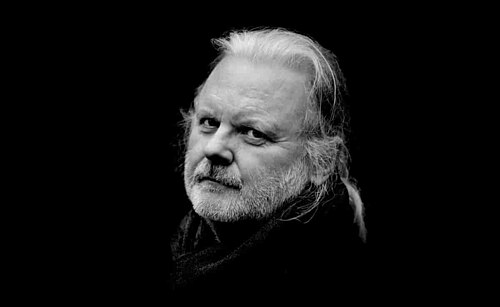
Born in 1959 on the west coast of Norway, Fosse is a playwright, novelist, and poet who writes in Nynorsk, a minority written form of Norwegian. He is the first Nynorsk writer and the fourth Norwegian to win the prize, after Bjornson, Hamsun, and Undset.
Sources
Facts are pinned from the official Nobel Prize API. The explanations were written from these sources: