The watchdogs of a hard neighbourhood
Awarded to Ales Bialiatski, Memorial and Center for Civil Liberties “The Peace Prize laureates represent civil society in their home countries. They have for many years promoted the right to criticise power and protect the fundamental rights of citizens. They have made an outstanding effort to document war crimes, human right abuses and the abuse of power. Together they demonstrate the significance of civil society for peace and democracy.”.
1Pick your depth
What was the 2022 Nobel Prize in Peace awarded for?
The 2022 Peace Prize went to three human rights champions from three neighbouring countries: the jailed Belarusian activist Ales Bialiatski, the Russian organisation Memorial, and Ukraine's Center for Civil Liberties. Their shared work is to defend ordinary people's rights and to document abuses of power so they cannot be denied.
2Guess first
These laureates did not broker a ceasefire or sign a treaty, the things we usually associate with a Peace Prize. So why does documenting abuses count as peace work?
How close were you?
3Learn it at ELI5
ELI5 done
Read the transcript
In Oslo, Natallia Pinchuk spoke for her husband, Ales Bialiatski. He was locked in a prison in Belarus. Asked when he would be released, he said he was already free, in his soul. Ales had started a group to help people jailed for protesting. It recorded how prisoners were treated, so they would not be forgotten. In Russia, a group called Memorial kept records like that. The Center for Civil Liberties recorded harm done to people in Ukraine's war. Ales and both groups shared the 2022 Nobel Peace Prize.
Undergrad done
Read the transcript
On 7 October 2022, Memorial shared the Nobel Peace Prize. Hours later, a Moscow court ordered its office to become state property. Soviet-era activists, Andrei Sakharov among them, founded Memorial in 1987. They wanted the victims of communist oppression never to be forgotten. In December 2021, Russian authorities ordered it forcibly liquidated. Ales Bialiatski, a co-laureate, founded Viasna in Belarus in 1996. It supported jailed demonstrators and their families. On announcement day, he was still detained without trial. The third share went to Kyiv's Center for Civil Liberties, founded in 2007. Since Russia's invasion in February 2022, it has documented Russian war crimes against Ukrainian civilians. Together, the Committee said, they demonstrate the significance of civil society for peace and democracy.
Expert done
Read the transcript
In her Nobel lecture, Oleksandra Matviichuk of the Center for Civil Liberties put the war at 8 years, 9 months and 21 days. After Russia annexed Crimea in 2014, her center was the first rights group to send mobile monitoring teams into Crimea and Donbas. They shared lists of political prisoners with other watchdogs. After the 2022 invasion, the teams documented war crimes. Memorial did such work in Chechnya, where its branch head, Natalia Estemirova, was killed in 2009. Branded a foreign agent, it was ordered liquidated in December 2021. Chairman Yan Rachinsky said nobody plans to give up. Ales Bialiatski founded Viasna in 1996, after amendments gave Belarus's president dictatorial powers. Imprisoned from 2011 to 2014, he was arrested again after the 2020 protests. In March 2023, a Minsk court sentenced him to 10 years. He was freed and expelled in December 2025.
The 2022 Peace Prize was shared by three winners in three countries that sit right next to each other: Belarus, Russia, and Ukraine. One is a person, Ales Bialiatski. The other two are organisations, Memorial and the Center for Civil Liberties.
What they have in common is simple and brave: they stand up for ordinary people's rights when their governments do not, and they carefully write down the truth about abuses, even when that is dangerous. Keeping an honest record is how they fight for a more peaceful, fairer society.
Honouring civil society, not states
The award came in 2022, the year Russia invaded Ukraine. By honouring activists from Belarus, Russia, and Ukraine together, the Norwegian Nobel Committee pointed to the people inside these countries defending human rights and democracy, rather than to the governments in power.
Across this region, the space for civil society, the independent groups and citizens who hold power to account, has been squeezed by arrests, threats, and shutdowns. Each laureate pushed back in their own country.
Who they are and what they did
- Ales Bialiatski (Belarus): founded the group Viasna in 1996 after constitutional changes handed the president sweeping powers. Viasna supported jailed demonstrators and their families and documented the torture of political prisoners.
- Memorial (Russia): established in 1987 to make sure the victims of Soviet-era repression were never forgotten, on the principle that confronting past crimes helps prevent new ones. It became Russia's largest human rights organisation.
- Center for Civil Liberties (Ukraine): founded in Kyiv in 2007 to strengthen democracy and the rule of law, and a leading voice for Ukraine joining the International Criminal Court.
Documentation as a form of defence
All three treat careful record-keeping as a weapon against impunity. Memorial preserves the memory of past repression; Viasna logged abuses against Belarusian prisoners; and after February 2022 the Center for Civil Liberties began documenting Russian war crimes against Ukrainian civilians. The Committee framed this work as showing the significance of civil society for peace and democracy.
The prize was widely read as a pointed statement. It was announced in October 2022, months into Russia's full-scale invasion of Ukraine, and honoured civil-society actors from the three countries at the centre of that crisis. The Committee was explicit that it was honouring champions of human rights and the rule of law in neighbour countries, not equating the states themselves.
Laureates under pressure
These were not safe choices. Bialiatski had been imprisoned from 2011 to 2014 and was again detained without trial when the prize was announced, later sentenced to a long prison term. Memorial had been branded a 'foreign agent' and was forcibly liquidated by Russian courts in December 2021; its chairman Yan Rachinsky responded, 'Nobody plans to give up.' The Center for Civil Liberties was working under wartime conditions.
Context, impact, and the debate it stirred
- Memory as prevention: Memorial's founding idea, that documenting past crimes deters future ones, is the through-line connecting all three laureates.
- Accountability infrastructure: the Center for Civil Liberties' war-crimes documentation feeds international efforts to prosecute, including through the International Criminal Court.
- The pairing drew unease: some in Ukraine objected to a shared prize that placed a Ukrainian organisation alongside Russian and Belarusian laureates while Russia was invading their country.
- A recurring Nobel choice: honouring grassroots civil society rather than heads of state, a reminder that peace is built from below as much as negotiated at the top.
Honoured while behind bars
When the 2022 Peace Prize was announced, Ales Bialiatski could not collect it or even hear it freely: he was imprisoned in Belarus, detained without trial. He was later sentenced to a long term. Memorial, meanwhile, had just been ordered shut by Russian courts. The prize honoured work its winners were being punished for.
4Check yourself
What do the three 2022 Peace laureates have in common?
Why does the Nobel Committee treat documenting abuses as peace work?
Two of the three laureates are not individuals. What are they?
Key terms
- Civil society
- The independent groups, organisations, and citizens, outside government and business, who hold power to account and defend people's rights.
- Viasna
- The Belarusian human rights organisation (the name means Spring) founded by Bialiatski in 1996 to support jailed protesters and document abuses.
- Memorial
- A Russian human rights organisation founded in 1987 to document Soviet-era repression, later forcibly liquidated by the authorities in 2021.
- Foreign agent
- A label used by some governments to brand and restrict independent organisations that receive foreign support or simply criticise the state.
- International Criminal Court (ICC)
- A permanent court that prosecutes individuals for war crimes, genocide, and crimes against humanity. The Center for Civil Liberties pushed for Ukraine to join it.
The laureates
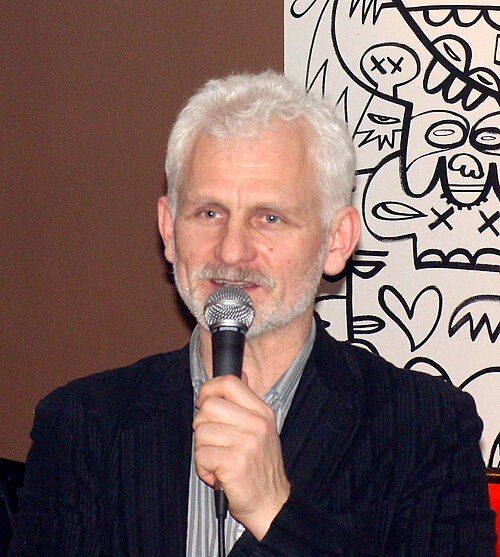
A founder of Belarus's democracy movement in the 1980s, Bialiatski created the human rights organisation Viasna (Spring) in 1996 to support jailed protesters and document torture. Imprisoned repeatedly by the authorities, he was behind bars when the prize was announced.
Founded in 1987 by Soviet-era activists, among them the Nobel laureate Andrei Sakharov, to ensure the victims of communist repression would never be forgotten. It grew into Russia's largest human rights organisation before the authorities forcibly liquidated it in December 2021.
Founded in Kyiv in 2007 to strengthen Ukrainian democracy and the rule of law. Since Russia's 2022 invasion it has worked to identify and document war crimes against civilians, helping build the case for accountability.
Sources
Facts are pinned from the official Nobel Prize API. The explanations were written from these sources: