Hidden order in noisy worlds: predicting a warming planet and the physics of disorder
Awarded to Syukuro Manabe, Klaus Hasselmann and Giorgio Parisi “for the physical modelling of Earth’s climate, quantifying variability and reliably predicting global warming · for the discovery of the interplay of disorder and fluctuations in physical systems from atomic to planetary scales”.
1Pick your depth
What was the 2021 Nobel Prize in Physics awarded for?
The 2021 Physics prize honours three scientists who found reliable patterns inside systems that look hopelessly messy. Syukuro Manabe and Klaus Hasselmann built the first physical models of Earth's climate and showed that rising carbon dioxide must warm the planet, separating the long-term warming signal from the day-to-day chaos of weather. Giorgio Parisi uncovered a hidden mathematical order beneath disordered materials such as spin glasses, a framework that now reaches from atoms to whole ecosystems.
2Guess first
Weather is famously unpredictable beyond a week or two. So how can scientists confidently say the planet will keep warming over the coming decades?
How close were you?
A handful of magnetic atoms are scattered at random through a metal, each pulling its neighbours in conflicting directions so no arrangement can satisfy them all. Is such a frozen, frustrated mess just random, or is there hidden structure?
How close were you?
3Learn it at ELI5
ELI5 done
Read the transcript
Giorgio Parisi's mother says that at 3, he could read the numbers on arriving buses. He grew up to study tiny magnets mixed into metal. Some pairs want to point the same way, others the opposite way. Giorgio found hidden patterns in that jumble. Weather jumps around every day. Climate is the long average. Syukuro Manabe's computer model showed more carbon dioxide warming the ground. Klaus Hasselmann found ways to spot human fingerprints on the climate. The three shared the 2021 Nobel Prize in Physics.
Undergrad done
Read the transcript
On 5 October 2021, Klaus Hasselmann's wife took the Nobel call. He said he would wake up tomorrow morning and find out. A dog off its lead darts around your legs. Its tracks are the weather, and your walk is the climate. Hasselmann treated chaotic weather as fast noise that can drive slow changes in the ocean. His fingerprint methods were used to prove human carbon dioxide is warming the air. Syukuro Manabe's 1960s model was a 40 kilometre column of air. You must always simplify, he says. There is so much physics in every raindrop that no one could compute everything. Giorgio Parisi took the other half. In 1979 he cracked a spin glass problem, a jumble of tiny magnets that cannot all agree.
Expert done
Read the transcript
In the 1950s, Syukuro Manabe left a Japan devastated by war and continued his career in the United States. With Richard Wetherald, he reduced the atmosphere to one column with fixed relative humidity. Their 1967 paper found 2.3 degrees of warming per doubling of carbon dioxide. The upper atmosphere cooled, which a stronger Sun would not do. Klaus Hasselmann's 1976 stochastic model treats weather as fast noise. Drawing on Einstein's Brownian motion, he showed this noise can drive slow ocean variations. His fingerprint methods then pick the human signal out of natural variability. In 1979, Giorgio Parisi used the replica trick to solve a spin glass problem. A ferromagnet has only 2 pure states, up and down. He saw that a spin glass must have infinitely many, and introduced a new order parameter to describe them. Proving his solution mathematically correct took many more years.
Imagine trying to predict the exact splash of every wave on a beach. Impossible. But you can still say with confidence that the tide will come in. The 2021 physics prize is about telling those two things apart: the wild, unpredictable details and the steady pattern hiding underneath them.
Two of the winners studied the climate. They showed that even though tomorrow's weather is a guess, the planet's average temperature follows clear rules. Pump more carbon dioxide into the air and you trap more heat, so the Earth must warm. That is a pattern you can trust even when the daily weather jumps all over the place.
Order hiding in the mess
The third winner, Giorgio Parisi, looked at materials where atoms are jumbled and frustrated, pulling against each other with no neat solution. He found a hidden order buried inside that mess. The same move, finding the rule beneath the randomness, ties all three winners together.
Earth's temperature is set by a simple accounting rule: energy arriving as sunlight must balance energy leaving as infrared heat. In 1967 Syukuro Manabe and Richard Wetherald captured this in a one-dimensional radiative-convective model, a single vertical column of atmosphere. It tracked how radiation and rising warm air carry heat upward, and crucially it let warmer air hold more water vapour, a feedback that amplifies any nudge.
Doubling CO2 warms the surface
Running the model, Manabe and Wetherald found that doubling the carbon dioxide concentration raised the surface temperature by about 2.3 degrees Celsius, while the stratosphere above cooled. That warm-below, cool-above signature is a fingerprint of greenhouse warming rather than of a brighter Sun. It was the first physically grounded estimate of how much CO2 actually matters.
Manabe's 1967 column model: CO2 versus surface temperature
Equilibrium surface temperature change for a column with realistic relative humidity. More CO2 means a warmer surface.
But why does the climate wobble at all, even without an external push? Klaus Hasselmann answered this in 1976 with a stochastic climate model. He treated fast, random weather like the jittering molecules that buffet a pollen grain in water, and the slow ocean like the heavy grain that accumulates those kicks into lasting drift. Short-term noise, integrated over time, produces long-term climate variability.
Separating the human signal from natural noise
Hasselmann then built optimal fingerprint methods to detect human-caused change against this noisy background. By weighting the patterns where the signal stands out most clearly, he showed that the observed warming carries the distinct fingerprint of greenhouse gas emissions, not natural variability. This is the statistical backbone of modern climate attribution.
Giorgio Parisi worked on a different complex system: spin glasses, alloys with magnetic atoms scattered at random so that their interactions conflict, a situation called frustration. Around 1980 he found an exact solution to a model of these systems, revealing that their many frozen states are organised in a hidden, hierarchical pattern. The method reaches far beyond magnets, into neural networks, optimisation, and machine learning.
Manabe's radiative-convective equilibrium model reduced the atmosphere to a single column in which net radiative heating is balanced by a convective adjustment that relaxes the lapse rate toward a stable profile whenever it would otherwise overturn. The decisive choice was to fix relative rather than absolute humidity, so that warming automatically raises the water vapour column. This closes a positive feedback loop: added CO2 lifts the temperature, warmer air holds more vapour, and vapour is itself a strong infrared absorber. The model yields a climate sensitivity near 2 degrees Celsius per CO2 doubling and predicts simultaneous surface and tropospheric warming with stratospheric cooling, the vertical signature that distinguishes greenhouse forcing from a change in solar output.
Weather as noise driving a red-spectrum climate
Hasselmann's 1976 model formalises the climate as a slow integrator driven by fast weather, mathematically a Langevin equation. White-noise weather forcing, integrated by the high-inertia ocean, produces a red, low-frequency-dominated climate response. This explains how a system with no long-term external change can still drift and vary on decadal scales, and it cleanly separates internal variability from forced response. The same framework underpins his optimal fingerprint method, which projects observations onto the predicted space-time response pattern to maximise the signal-to-noise ratio for detection and attribution.
Parisi attacked the Sherrington-Kirkpatrick spin glass, the mean-field model of magnets with random, competing couplings. The replica trick computes the disorder-averaged free energy by analysing n copies of the system and taking n to zero, but the naive replica-symmetric solution gives a negative entropy, a clear sign that it is wrong. Parisi's breakthrough was full replica symmetry breaking: an order parameter that is not a single number but an entire function, encoding the probability distribution of overlaps between states. The solution reveals an ultrametric, hierarchically nested organisation of infinitely many pure states separated by extensive energy barriers, a rigid order beneath apparent randomness.
What unites the two halves of the prize is a single stance: in a system with enormous numbers of interacting parts and a heavy dose of randomness, the right move is not to track every detail but to characterise the statistics and name the structure that survives the noise. Manabe and Hasselmann extracted a predictable, forced climate signal from the chaos of weather; Parisi extracted a strict mathematical hierarchy from the frozen chaos of disorder. His order parameter is, in spirit, the same kind of object as Hasselmann's fingerprint, a way to identify the pattern hiding inside fluctuations. Parisi's tools, born for atomic spins, now describe neural networks, optimisation landscapes, structural glasses, and even flocking birds, which is why the citation stretches from atomic to planetary scales. The deep claim of the 2021 prize is that complexity is not the same thing as unpredictability.
A 1967 desktop calculation still holds up
Manabe and Wetherald's 1967 estimate, that doubling carbon dioxide warms the surface by a little over 2 degrees Celsius, sits squarely inside the range that today's vastly more complex supercomputer models still produce, more than half a century later. A single column of atmosphere had captured the essential physics.
4Check yourself
In Manabe's column model, what made the model predict a stronger warming from CO2?
Hasselmann's stochastic model explains climate variability by comparing the climate to what?
What did Parisi discover beneath the apparent randomness of a spin glass?
Key terms
- Radiative-convective equilibrium
- A balance in which radiation and rising warm air together carry heat through a column of atmosphere, the core of Manabe's one-dimensional climate model.
- Climate sensitivity
- How much the surface warms for a doubling of atmospheric carbon dioxide. Manabe's 1967 model put it near 2 degrees Celsius.
- Water vapour feedback
- Warmer air holds more water vapour, itself a greenhouse gas, so an initial warming amplifies itself. Fixing relative humidity captures this in a model.
- Stochastic climate model
- Hasselmann's idea that slow climate variability is produced when a high-inertia system, such as the ocean, integrates fast, random weather forcing.
- Fingerprint method
- A statistical technique that projects observations onto the expected pattern of human-caused change to pull that signal out of natural variability.
- Spin glass
- An alloy with magnetic atoms scattered at random so their interactions conflict, freezing into a disordered state with no single tidy magnetic pattern.
- Replica symmetry breaking
- Parisi's solution method in which the order parameter becomes a whole function, revealing a hidden hierarchy of states inside a disordered system.
The laureates
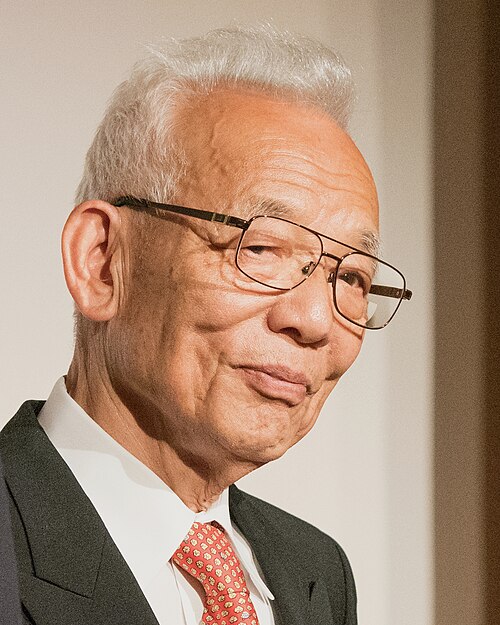
Born in 1931 in Japan, Manabe is a senior meteorologist at Princeton University in the USA. In 1967, with Richard Wetherald, he built a one-dimensional radiative-convective model of the atmosphere that included the water vapour feedback, and used it to make the first physically grounded estimate that doubling carbon dioxide warms the surface by about 2 degrees Celsius. His work led on to the first three-dimensional and coupled ocean-atmosphere climate models.
Born in 1931 in Hamburg, Germany, Hasselmann is a professor at the Max Planck Institute for Meteorology in Hamburg. In 1976 he showed how slow climate variability arises from fast, random weather forcing, linking the two. He then developed optimal fingerprint methods that detect human-caused warming against the background of natural variability, providing the statistical basis for climate attribution.
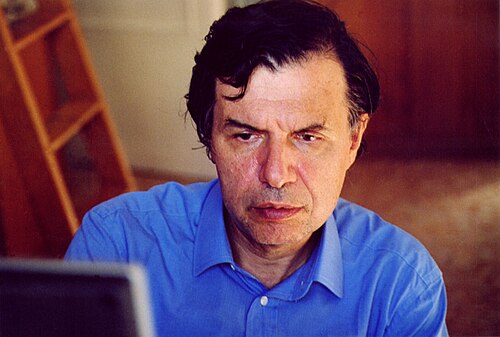
Born in 1948 in Rome, Italy, Parisi is a professor at Sapienza University of Rome. Around 1980 he found an exact solution to the Sherrington-Kirkpatrick model of spin glasses through replica symmetry breaking, revealing a hidden hierarchical order inside disordered, frustrated systems. The framework now applies across fields from condensed matter to neural networks and machine learning.
Sources
Facts are pinned from the official Nobel Prize API. The explanations were written from these sources: