Attosecond flashes: a camera fast enough to freeze an electron
Awarded to Pierre Agostini, Ferenc Krausz and Anne L’Huillier “for experimental methods that generate attosecond pulses of light for the study of electron dynamics in matter”.
1Pick your depth
What was the 2023 Nobel Prize in Physics awarded for?
The 2023 Physics prize honours the camera shutter for the electron. Electrons move so fast that ordinary flashes of light only blur them, so the laureates built bursts of light measured in attoseconds, billionths of a billionth of a second. Those flashes are finally brief enough to freeze and follow electrons inside atoms and molecules.
2Guess first
To freeze a hummingbird's beating wings in a photo you change one camera setting. Which one, and why does it matter even more for an electron?
How close were you?
A single pure colour of light is one smooth wave. How could adding many different colours together ever give you a flash shorter than any one of them?
How close were you?
3Learn it at ELI5
ELI5 done
Read the transcript
Anne L'Huillier was teaching when she heard she had won a Nobel Prize. She went back to her class. A hummingbird beats its wings 80 times a second. Only a very short flash freezes them. Electrons inside atoms move far faster. Freezing them takes flashes lasting attoseconds. An attosecond is a billionth of a billionth of a second. Anne shone a laser through gas and got higher notes of light. Pierre Agostini and Ferenc Krausz turned them into flashes that short. The three shared the 2023 Nobel Prize in Physics.
Undergrad done
Read the transcript
On 3 October 2023, Pierre Agostini's daughter phoned him. She had seen his Nobel Prize on Google, and he first thought it was a mistake. For decades, a femtosecond looked like the shortest possible flash. Electrons inside atoms change within attoseconds, thousandths of a femtosecond. In 1987, Anne L'Huillier sent infrared laser light through a noble gas. The field tore electrons loose and drove them back. Those returns gave off light at many overtones of the laser. Overtones that peak together add up to short ultraviolet bursts. In 2001, Agostini's group measured a train of them, each 250 attoseconds long. Ferenc Krausz and his team isolated a single 650 attosecond pulse. Physicists now use such pulses to follow electrons moving through molecules and materials.
Expert done
Read the transcript
In 2001, in a basement lab in Vienna, Ferenc Krausz's group timed electron motion within one cycle of visible light. He will never forget that morning. The source dates to 1987 at Saclay. Anne L'Huillier and colleagues drove rare gases with 1064 nanometre light. In argon, harmonics stayed level from the 5th to about the 33rd. The laser field frees an electron and drives it back to its ion. Recombination emits the gained energy as an extreme ultraviolet photon. This repeats every half cycle, building a phase-locked comb of odd harmonics. Pierre Agostini's group at Saclay measured that comb as a train of 250 attosecond bursts. The trick was a delayed copy of the drive laser. Krausz filtered cutoff harmonics from a few-cycle pulse into one 650 attosecond burst. By 2010, his team clocked neon's 2p electrons leaving 21 attoseconds after its 2s electrons.
To photograph a hummingbird's wings without a blur, you need a camera with a very fast shutter. The faster the thing you want to freeze, the shorter the flash of light has to be.
Electrons are the tiny particles that whizz around inside every atom, and they move almost unimaginably fast. To take a sharp picture of one, an ordinary camera flash is far too slow. You need a flash that lasts only an attosecond, a billionth of a billionth of a second.
A shutter fast enough for an electron
This year's laureates learned how to make flashes of light so short they can freeze an electron in mid-motion. For the first time we can watch what electrons actually do, instead of only guessing from a blur.
An attosecond is so short it is hard to picture. There are as many attoseconds in one second as there have been seconds since the universe began, about 13.8 billion years ago. That is the tiny stopwatch you need to keep up with an electron.
Different things in nature move at different speeds, and each needs its own shutter speed. Atoms in a vibrating molecule shift over femtoseconds (10⁻¹⁵ s), and filming that already won a Nobel Prize. But the electrons themselves are roughly a thousand times faster, moving on the attosecond scale (10⁻¹⁸ s). For decades the femtosecond was treated as the shortest flash light could make, so electrons stayed a blur.
The breakthrough came from a process called high-harmonic generation. In 1987 Anne L’Huillier sent an intense infrared laser into a noble gas and found that the gas emitted not just the original colour but a long ladder of higher overtones, much the way a plucked guitar string sounds its fundamental note plus a series of higher tones.
Many waves add up to one spike
Each overtone is a pure wave of a different frequency. When many of them overlap in step, they cancel almost everywhere and reinforce only in one brief instant, producing a sharp spike of light. The more overtones you combine, the shorter the spike, until it lasts only attoseconds. It is the same idea that lets a wide band of frequencies build a sharp pulse.
With these flashes in hand, physicists can do something genuinely new. They can measure how long it takes an electron to be pulled off an atom, and watch the cloud of electrons in a molecule slosh from place to place. Before, those positions could only be recorded as a smeared average.
Electron motion sits at the attosecond scale because that is the natural clock of bound charge. Where atomic vibrations and chemical bonds evolve over femtoseconds (10⁻¹⁵ s), the electrons themselves rearrange roughly a thousand times faster, over tens to hundreds of attoseconds (1 as = 10⁻¹⁸ s). Resolving that motion in time demands a probe pulse of comparable length, well below the femtosecond floor that conventional mode-locked lasers could reach. Improving existing lasers was not enough; an entirely different physical process was needed.
Rip, accelerate, recombine
An intense infrared field bends an atom's potential enough to tunnel-ionise one electron. The freed electron is accelerated away by the oscillating field, then driven back when the field reverses, and on recombining with its parent ion it releases its gained kinetic energy plus the ionisation energy as a single high-energy photon. Repeated every half-cycle of the laser, this emits high harmonics of the drive frequency that extend in a broad plateau into the extreme ultraviolet. This semiclassical recollision picture is the engine behind every attosecond source.
The harmonics matter because they are phase-locked. A coherent comb of equally spaced frequencies is, by Fourier synthesis, a train of pulses in time, and the wider the plateau, the shorter each burst. Left alone the emission is chirped, because for a given harmonic energy two electron trajectories, a 'short' path and a 'long' path, recombine at slightly different times. Compensating that phase is part of squeezing a pulse down to its limit.
A pulse train versus a single shot
Pierre Agostini characterised a train of consecutive bursts of about 250 attoseconds each, reconstructing them by letting the pulse train ionise atoms alongside the original infrared field and reading the resulting electron sidebands. Ferenc Krausz instead gated the process down to one isolated pulse of about 650 attoseconds, then used it as a pump-probe shutter to clock electrons being emitted from atoms. A train gives periodic strobe-like access; a single pulse gives one clean start-the-clock event.
What the attosecond shutter opens up
- Photoemission timing: measuring the delay, often tens of attoseconds, between light striking an atom and an electron actually leaving it, and how that delay depends on how tightly the electron was bound.
- Charge migration: following how the electron cloud in a molecule redistributes immediately after ionisation, before the much heavier nuclei have had time to move.
- Materials and electronics: watching, and eventually steering, how electrons respond inside solids, which matters for faster signal processing.
- Diagnostics: using the characteristic attosecond response of matter to identify molecules, with proposed applications in medical sensing.
“We can now open the door to the world of electrons. Attosecond physics gives us the opportunity to understand mechanisms that are governed by electrons.”Eva Olsson, Chair of the Nobel Committee for Physics, 2023
A second holds as many attoseconds as the universe holds seconds
An attosecond is 10⁻¹⁸ of a second. There are as many attoseconds in a single second as there have been seconds since the universe began, roughly 13.8 billion years ago. A flash of light crossing an ordinary room already lasts about ten billion attoseconds, so an attosecond pulse is short even by the standard of light itself.
4Check yourself
Why do you need attosecond flashes to study electrons, when femtosecond flashes were enough for chemistry?
What does high-harmonic generation do when an intense laser passes through a noble gas?
In 2001 Agostini and Krausz both reached the attosecond scale, but in different ways. What was the difference?
Key terms
- Attosecond
- One quintillionth of a second, 10⁻¹⁸ s. It is the natural timescale on which electrons move inside atoms and molecules.
- High-harmonic generation
- A process in which an intense laser driven into a gas makes the gas re-emit a ladder of much higher frequencies, or overtones, whose combination can form attosecond pulses.
- Overtone (harmonic)
- A wave whose frequency is a whole-number multiple of a fundamental frequency. In light, stacking many overtones in phase produces an ultrashort pulse.
- Femtosecond
- 10⁻¹⁵ s, a thousand attoseconds. The timescale of atomic vibration and chemical bonds, and long thought to be the shortest flash of light that could be made.
- Electron dynamics
- The fast rearrangement and motion of electrons within atoms, molecules and materials, the very processes attosecond pulses are built to observe.
- Pulse train
- A regular series of repeated light flashes. Agostini measured a train of attosecond pulses; an isolated single pulse, as Krausz made, acts like one camera shutter.
The laureates
In 2001 Pierre Agostini generated and measured a train of consecutive light pulses, each lasting only about 250 attoseconds. His method proved that the ultrashort flashes promised by high-harmonic generation were real and could be timed. Born in Tunis in 1941, he is a professor at The Ohio State University.
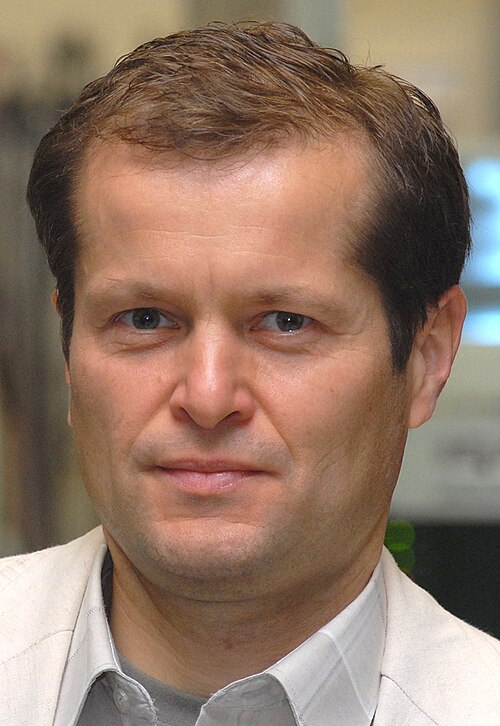
Also in 2001, Ferenc Krausz and his group isolated a single light pulse lasting about 650 attoseconds, like uncoupling one carriage from a moving train. He used it to watch electrons being torn from their atoms in real time. Born in Mor, Hungary, in 1962, he directs the Max Planck Institute of Quantum Optics in Garching.

In 1987 Anne L’Huillier showed that sending an infrared laser through a noble gas produces a ladder of light overtones, the raw material from which attosecond pulses are built. Over the following years she did much of the work to explain why the effect happens, which is what made the field possible. Born in Paris in 1958, she is a professor at Lund University in Sweden.
Sources
Facts are pinned from the official Nobel Prize API. The explanations were written from these sources: